Free Puzzles for Adults: Pros, Cons and Alternatives
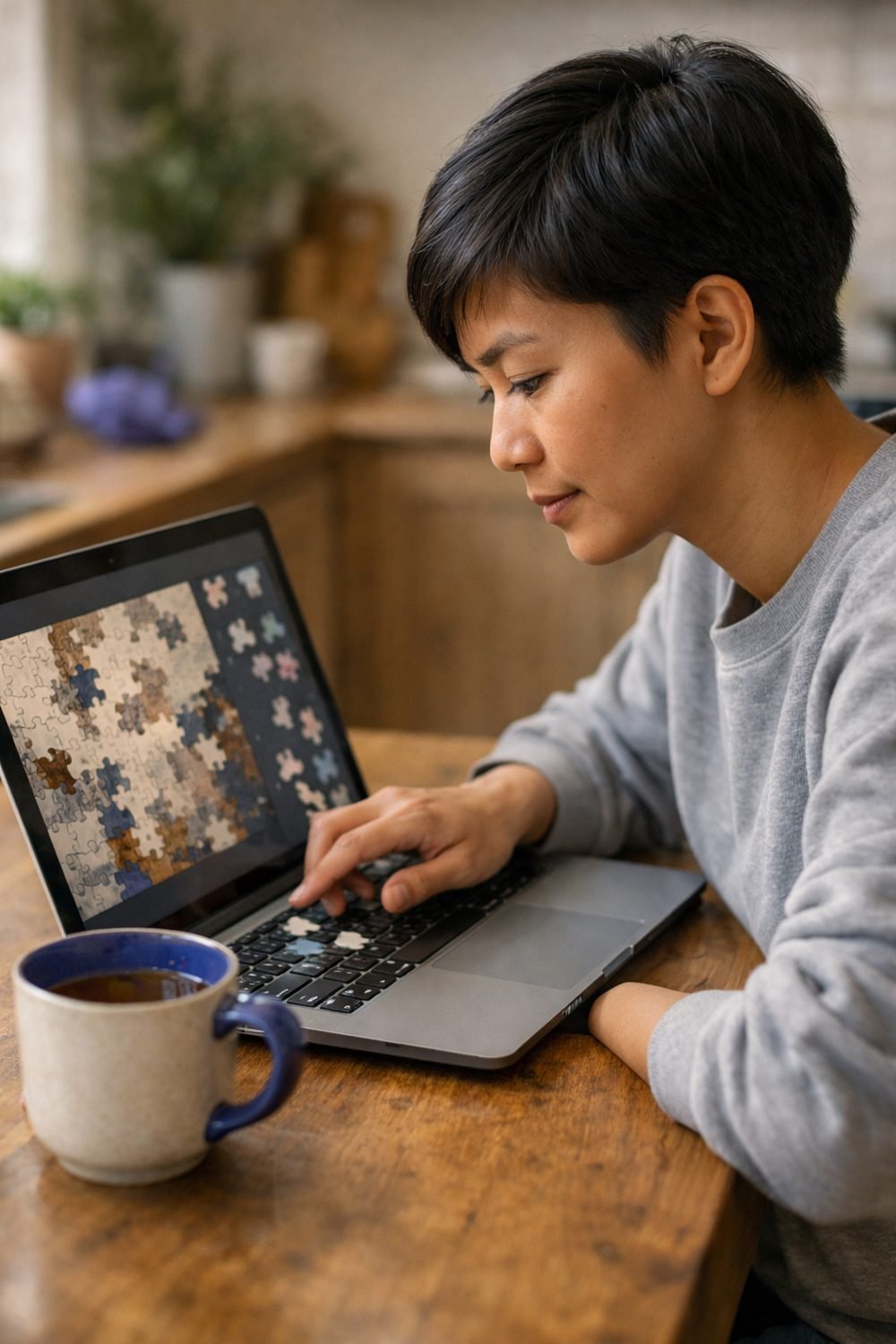
Free puzzles for adults are everywhere once you start looking, and the choices can feel endless. Crosswords, sudoku, logic grids, word search puzzles for adults, jigsaws on a screen. The catch is that "free" usually comes with a trade-off. Sometimes it's ads. Sometimes it's ink. Sometimes it's waiting three weeks for a library book.
Many people try free puzzle options on quiet evenings, when they want something to do with their hands and brain that isn't scrolling. Some stuck. Some I dropped after a week. Here's the good and the annoying, plus a few alternatives if free stops working for you.
Short on time? Our top picks: The New York Times Games, Sudoku.com, Puzzle Baron and Jigsaw Explorer. See all picks
Printable Puzzles for Adults
Printables were my first stop. You search for a type of puzzle, find a site that offers PDFs, and print a page. Done. No account, no app, no battery to charge.
Printables are worth trying because paper feels different. You can scribble in the margins, cross things out, and leave a half-finished sudoku on the kitchen table for later. A couple might print two copies of the same logic puzzle and race each other after dinner. That was more fun than it had any right to be.
The good:
- Free to download on many sites
- No screen once it's printed
- Easy to share with friends or family
The not so good:
- Paper and ink add up if you print a lot
- Quality varies a lot between sites
- Some "free" printables ask for your email first
A tip: print in black and white, and use scrap paper for practice puzzles. If a site makes you sign up just to see a single page, I usually move on unless it looks really good.
Free Online Puzzles in Your Browser
This is the fastest option. Type in what you want and you're playing in seconds. Daily puzzles on crossword sites, jigsaw sites like Jigsaw Explorer where you drag pieces around, nonogram pages, chess puzzles. There's a huge amount out there.
The downside hit me pretty quickly, though. Ads. Some sites are fine, with a small banner at the side. Others have pop-ups that cover half the puzzle or video ads that start playing with sound. It's easy to lose a nearly finished jigsaw when an ad refreshes the page. At that point, many people close the tab and don't go back.
Screen time is the other thing. If you already sit at a computer all day, an hour of online puzzles in the evening can leave your eyes tired. That's just my experience, but it's worth thinking about.
If you go this route, find two or three sites you trust and bookmark them. Hunting for a new site every night is how you end up on the ad-heavy ones.
Puzzle Apps on Your Phone
Apps are great for waiting rooms, bus rides, and the ten minutes before a meeting starts. Many have hundreds of levels, hints when you're stuck, and they save your progress.
But a lot of free apps are free in name only. You'll see ads between levels, "energy" systems that limit how much you can play, or offers to pay for hints. Some want you to make an account before you can start. Paying for a good app can be reasonable, but being nudged every two minutes gets old.
What I look for in a free puzzle app for adults
- Ads that are easy to close, or only between levels
- No limit on how many puzzles I can play in a day
- Works offline
- Doesn't ask for more permissions than it needs
Before you download anything, read the app store page and the privacy details. If something seems off, skip it. There are plenty of others.
Puzzle Books (Cheap, Not Free)
Okay, puzzle books cost money, so they're not strictly free. They're included here because they're a dependable alternative worth returning to. A single book can last weeks. It fits in a bag. There are no ads, no notifications, no Wi-Fi needed.
You can often find them cheaply at secondhand shops or charity stores. Check that the puzzles haven't already been filled in, though. A "like new" used crossword book may turn out to have its first twenty pages already done in pen. Lesson learned: flip through it first.
If you're on a tight budget, one book shared between two people works fine. Do the puzzles in pencil, erase, pass it on.
Quick side note: if you like making your own games as much as solving them, our email list sends a free Blank Board Game Board and 10 Card Templates when you join.
Newspaper Puzzles
There's something nice about the daily crossword with morning coffee, whether it's in print or on a site like The New York Times Games, and it's one of the simplest brain puzzles to turn into a habit. Newspapers have done this for ages, and lots of people swear by it as a habit. If someone in your house already gets the paper, the puzzles are basically free.
The limit is variety. You usually get a crossword, maybe a sudoku, maybe a word game. Same format, every day. That's fine if you love those puzzles. If you want to try logic grids or cryptic puzzles or something new, you'll run out quickly.
Some papers also put their puzzles behind a paywall online now. So "free" depends on how you get your news. Check the paper's site to see what's included.
Library Loans
Honestly, the library is the most underrated option on this list. Many libraries have puzzle books, and some lend jigsaw puzzles and board games too, while apps like Libby can link to your library card for digital loans. It costs nothing with a library card.
The trade-off is waiting. Popular items can have a hold list. And with jigsaws, there's always the worry that a piece is missing. A borrowed 1,000-piece puzzle can mean spending the last evening hunting for one piece of sky. It was under the couch. Still counts.
Ask your librarian what they have. Some libraries also run puzzle swaps or games nights, which is a nice way to meet people who like the same stuff.
Picking What Works for You
No one option is the best for everyone. It depends on how you like to solve and where you'll be doing it. Here's how I'd think about it:
- Want zero cost and zero screens? Library loans or printables.
- Want something right now? A browser puzzle site you trust.
- Want puzzles on the go? A well-reviewed app, or a small puzzle book.
- Want a daily routine? The newspaper crossword.
What I'd skip: chasing every new "free puzzle" site or app you see advertised. It's a lot of clicking for not much payoff. Pick a couple and stick with them for a while.
If you end up doing puzzles with friends, keeping score can make it more fun. The Game Night Calculator and Tracker Spreadsheet below this post is handy for that. And if you like jotting down which puzzles you finished or which sites were worth it, the Gaming & Hobbies Journal below is a simple place to keep notes.
Puzzle Picks Worth a Look
If you want to try a few well-known options beyond random web searches, these are good places to start. Each one suits a slightly different kind of solver.
The New York Times Games
This suits people who want a daily crossword habit with a polished feel. Check which puzzles are free and which need a subscription before you settle in.
Sudoku.com
A good fit for beginners who want a simple sudoku game on a phone or in a browser. Look at how many ads appear and whether the extras are optional.
Puzzle Baron
This suits people who want logic grid puzzles and want to move past basic crosswords. Check how the site handles ads and any sign-up requests before you commit time.
Jigsaw Explorer
A friendly pick for anyone who misses jigsaws but lacks table space. Try it on the device you will actually use, since piece handling can feel different on a phone than on a computer.
Lichess
This suits people who like chess puzzles and want a no-fuss place to practice. Check that the puzzle level suits you, as beginners may want to start gently.
Libby
This app connects to your local library card and suits readers who like borrowing digital books and magazines. Check whether your library offers puzzle titles through it, as collections vary.
Penny Dell Puzzles
A long-running puzzle book publisher that suits people who want a cheap, screen-free stack of crosswords and word searches. Flip through a copy first to confirm the puzzle mix and difficulty match your taste.
Check current plans and prices on each brand's own site before you decide.
FAQ
Are free puzzle sites safe to use?
Most well-known ones are fine, but some have aggressive ads or ask for personal details. Stick to sites with a good reputation and close anything that pushes pop-ups or downloads. If you're unsure, check reviews first.
Do puzzles help with memory?
No health claims are made here, and you should be wary of anyone who promises puzzles will fix your memory. They're a fun hobby and a nice way to unwind. If you have real concerns about memory, a doctor is the right person to ask.
What are the best puzzles for adults who are just starting out?
Word puzzles for adults, like easy word searches, and simple sudoku are a gentle start. They have clear rules and don't need special knowledge. Once those feel easy, try logic grids or mini crosswords.
Can I do free puzzles without a printer?
Yes. Browser sites and apps work fine, and the library lends puzzle books. You can also copy a simple grid onto paper by hand if you want the pen-and-paper feel.
Summary
Free puzzles for adults are easy to find, but each type comes with something you give up: ink, time, attention, or patience. Printables and libraries are great for screen-free fun. Browser sites and apps are fast but can be cluttered with ads. Newspapers are a solid daily habit, and cheap puzzle books are a good backup when free options start to annoy you.
If you'd like to try making a puzzle or game of your own, grab the free Blank Board Game Board and 10 Card Templates by joining the email list. Then have a look at the Game Night Calculator and Tracker Spreadsheet and the Gaming & Hobbies Journal below this post to see if either one fits how you play.
Printables and tools that can help
Game Night Calculator and Tracker Spreadsheet
A spreadsheet with a summary page and a calculator sheet. Works in Excel and Google...
See details