Electric Train Set: A Plain-English Guide
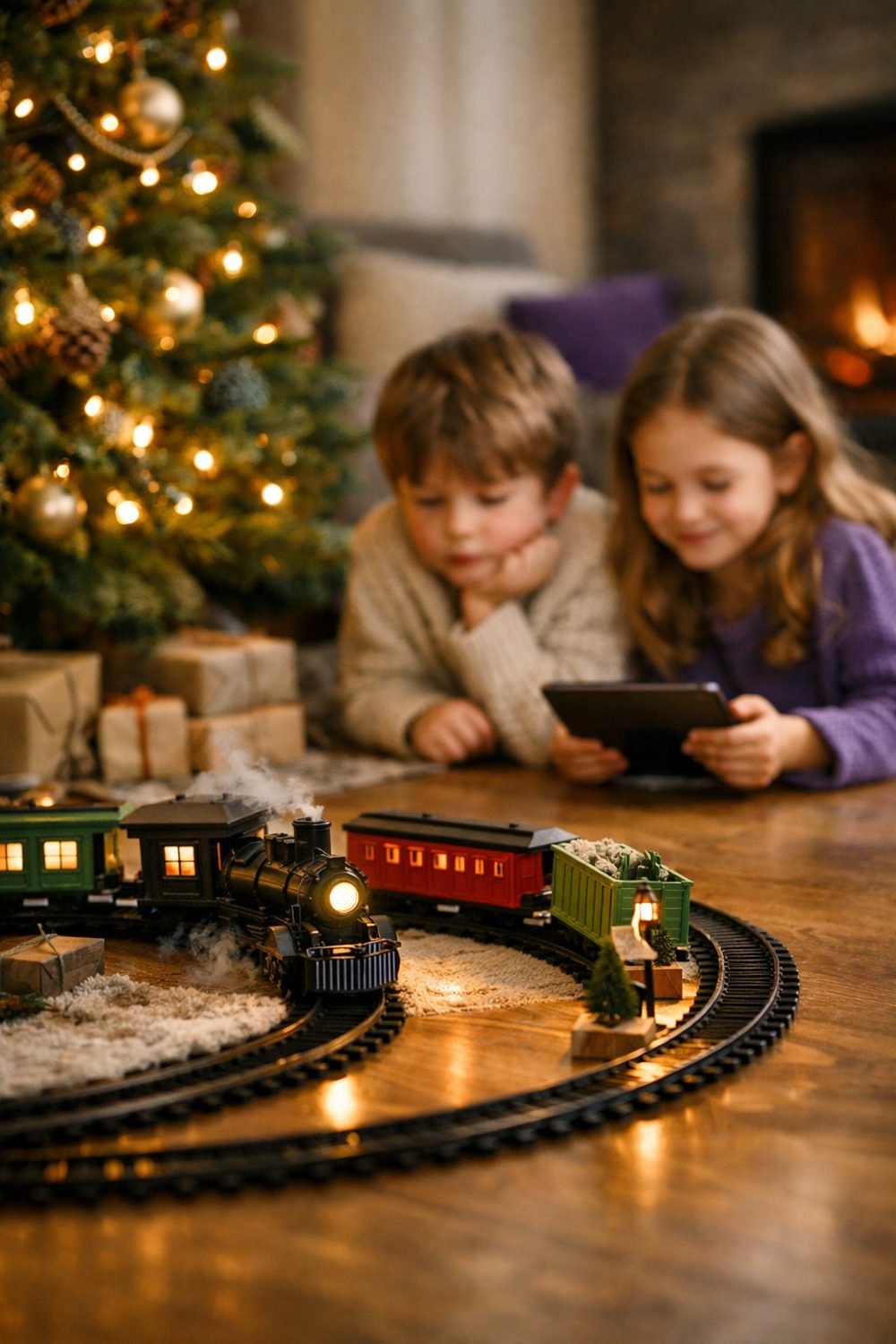
An electric train set is one of the best ways to start a model railway layout, and a good model train set usually comes with everything in one box. You get a loop of track, a locomotive, a few cars, and some way to power it all, usually in one box. But the boxes on the shelf can look a lot alike, and the differences between them matter more than the pictures suggest.
It was the wrong size for my room, and I didn't realize the track couldn't be expanded easily. You can still run a set for months without knowing the basics, but you will likely choose better if someone walks you through them first. That's what this guide is for.
Short on time? Our top picks: Bachmann Trains, Lionel, Hornby and Kato. See all picks
Quick summary
- Pick your scale first. It decides how much space you need and which add-ons will fit.
- Look at the track type. Track with a built-in roadbed is easier for beginners, especially on carpet.
- Know your power system. Standard DC is simpler. Digital control (DCC) gives you more, but costs more and takes more learning.
- Measure your space before you buy. Include room to reach the far side of the layout.
- Check if the brand sells add-ons. Extra track, switches, and cars make a set last much longer.
- Read the age rating on the box. Small parts and fragile details aren't meant for young kids.
Start With Scale When Choosing an Electric Train Set
Scale is how much smaller the model is than a real train. It's the first thing to settle, because your track, buildings, and extra cars all need to match it. Mixing scales usually doesn't work.
The common scales in plain terms
Here are the ones you'll see most often in starter sets:
- G scale: Big and chunky. Often used in gardens or around a Christmas tree. Sturdy, which makes it friendlier for younger kids.
- O scale: Large and classic. Many older family sets were O scale. Takes up a lot of floor.
- HO scale: The most popular size for hobby layouts. There's a huge choice of add-ons.
- N scale: Small. Lets you fit a lot of track into a modest space, but parts are tiny and fiddly.
How to choose between them
If you're not sure, HO is a safe middle ground. It's big enough to handle without squinting and small enough to fit on a table. The selection of cars, buildings, and scenery is wide, so you won't run out of things to add.
N scale is great if you live in an apartment, and n scale train sets from makers like Kato fit on a shelf-sized board. It's a good option, but you may want to skip it for a small child or for anyone who gets frustrated putting tiny wheels back on the rails.
G and O are the fun "big train" choices. They look amazing running around a room, but you'll need floor space and a bit more budget for extras.
Track: What Comes in a Model Train Set and What Doesn't
Most starter sets include a simple oval of track. That's enough to get the train moving, and you'll probably get bored of it within a week or two. That's normal. Knowing what kind of track you have tells you how easy it'll be to grow.
Track with roadbed vs. plain track
Some track has a plastic base molded on, which looks like the gravel under real rails. Other track is just rails and ties. The roadbed kind snaps together firmly and stays put on carpet or rugs. Plain track is cheaper and more flexible for permanent layouts, but it can shift around on soft floors and the joints come loose more easily.
For a first set, I'd pick roadbed track every time. A train derailing at the same wobbly joint can eat up a whole evening.
Rail material
You might see brass, nickel silver, or steel listed. Nickel silver is often preferred because it tends to stay cleaner and conduct power well. Brass can tarnish, which can make the train stutter. If the box doesn't say, check the maker's product page.
Is the oval included, or just a few pieces?
Read the contents list carefully. Some cheaper sets come with a very small loop. Others say "track sold separately." That second one catches people out on gift days.
Power: Transformers, Controllers, and DCC
Your train needs electricity sent through the rails. In a starter set, that usually comes from a power pack or transformer plugged into the wall, with a dial or slider to control speed.
Standard DC control
This is the simplest system. Turn the knob one way and the train speeds up. Flip the switch and it goes backward. If you run two trains on the same track, they both respond to the same knob, which is the main limit.
Honestly, for a kid's first set or a casual loop, DC is plenty.
Digital Command Control (DCC)
With DCC, each locomotive has a small decoder inside it. You can run several trains on one track at different speeds, and some models add sound and lights you can turn on and off. It's very cool. It's also more expensive and has more of a learning curve.
Some sets are "DCC ready," which means you can add a decoder later. That's a nice middle option if you think you might get more serious.
Remote and battery sets
Some toy-style sets, such as LEGO City Trains, run on batteries with a remote control. These are fine for little kids, and you don't have to plug anything in near the floor. They're usually not compatible with hobby track or locomotives, though, so they don't grow well.
For any plug-in power pack, follow the safety directions in the manual and keep cords out of walkways. If the box mentions anything you don't understand about the electrical side, ask the seller before you set it up.
Space: Measure Before You Fall in Love With a Box
This is where I went wrong. The box showed the oval size, and I thought "that'll fit." It did fit, barely, but I couldn't reach the back of the track without knocking things over.
What to measure
Grab a tape measure and check:
- The length and width of the floor or table you'll use.
- How far you can comfortably reach from the edge. For most adults, that's not as far as you'd think.
- Whether you'll need to walk around it or get to a door, closet, or outlet.
Then compare those numbers to the track footprint listed on the box or product page. Leave a little extra room on every side.
Floor vs. table
Floor layouts are quick and free. They're also in the way of feet, pets, and vacuum cleaners. A table, a sheet of board on sawhorses, or a door laid flat gives you a permanent spot where you can add scenery. A train set tends to get more interesting once it moves off the floor.
One small tip: put the layout somewhere with steady temperature. A hot attic or damp garage can be hard on track and electronics.
Comparing Starter Sets: A Few Real Examples
It helps to picture different buyers, because the "best" set really depends on who's using it.
The young kid around the tree
A G or O scale set with tough plastic parts makes sense here. You want something that survives being grabbed. Speed and detail matter less than whether it keeps running after a tumble.
The curious adult with a spare corner
An HO set with roadbed track and DC control is a comfy start. You can add a couple of switches and a siding next month, then think about scenery. If you're tempted by sound, look for a DCC-ready loco.
The apartment dweller
An N scale set gives you a real layout on a bookshelf-sized board. Just be ready for small parts and keep a magnifier nearby. A magnifier really is worth having.
The parent and older child doing it together
HO again, honestly. It's the size where a kid can help with buildings and scenery without parts being too tiny. Splitting tasks works well: one person handles track, the other plans the town.
If you like planning things out on paper, our free Blank Board Game Board and 10 Card Templates (yours when you join the email list) work surprisingly well for sketching a mini layout or making little "job cards" for which car goes where.
Expansion: Will Your Electric Train Set Grow With You?
A starter set is just that, a start. The fun usually begins when you add your first switch and the train can take a different path. Before you buy, check what the brand offers.
What to look for
- Extra track pieces: straights, curves, and switches (also called turnouts).
- Expansion packs that add a siding or a second loop.
- More cars and locomotives in the same scale.
- Buildings, bridges, and scenery kits, from makers such as Walthers.
Compatibility between brands
Locomotives and cars from different makers in the same scale often run together, but track pieces may not join up. Couplers (the hooks between cars) can vary too. Look at the maker's site or ask in a hobby shop before mixing brands.
Keeping track of what you own
Once you have a few boxes of parts, it's easy to forget what you've got. You might keep notes on what you've bought, what needs fixing, and ideas for the next section. The Gaming & Hobbies Journal below this post is handy for exactly that kind of thing.
Age Ratings and Safety
The age on the box isn't about how smart a kid is. It usually reflects small parts, sharp edges, or electrical components. Take it seriously.
Reading the label
Many hobby sets are marked for older kids and teens because of tiny parts and delicate details like handrails and mirrors. Toy-style sets are built tougher for younger children. If a set is marked for ages above your child's, it's not that they can't enjoy it. It just means an adult should run it and store it.
Simple habits that help
Unplug the power pack when you're done. Keep small parts in a labeled container. Don't let a toddler crawl near a running layout. These sound obvious, and yet I've stepped on a boxcar barefoot more than once.
For anything about electrical safety in your home, follow the manufacturer's instructions, and talk to an electrician if you're unsure about outlets or extension cords.
Common Mistakes
These are common mistakes, and most beginners make several of them. You don't have to.
- Buying by the box picture. The photo shows the set at its best. Read the actual contents list.
- Ignoring scale when buying extras. An N scale bridge won't help your HO train. Check before you pay.
- Skipping the measuring step. Reach matters as much as floor space.
- Forgetting to clean the track. Dust and grime cause stalls. A soft cloth or a track-cleaning block helps a lot.
- Going all-in on DCC right away. It's great, but for many beginners it's overkill. Start simple and upgrade if you love it.
- Forcing cars onto the rails. Gently set each wheel in place. Pushing bends parts.
- Running it on thick carpet. Track sinks unevenly and trains derail. A board underneath fixes this.
Keeping Your Set Running Well
A little care goes a long way. You don't need a workshop.
Cleaning
Wipe the rails every so often, especially if the train starts jerking. Check the locomotive wheels too, because dirt builds up there. Some people use special cleaning fluid. Follow the maker's advice on what's safe for your track.
Storage
Keep the original boxes if you can. They protect the cars and make packing up easy. A plastic bin with a lid works for track pieces.
When something breaks
Couplers and wheels are the usual suspects. Many brands sell replacement parts. If the locomotive stops working entirely, check the power connection and clean the rails first. It's usually something small.
Starter sets and brands worth a look
These are well-known makers of electric train sets and add-ons. Which one suits you depends on your scale, space and budget, so use them as a starting point for your own research.
Bachmann Trains
A popular name for beginner-friendly sets, with several scales on offer. It suits first-time buyers who want a ready-to-run box. Check which scale and track type a particular set uses before you buy extras.
Lionel
Known for classic O gauge and larger-scale sets that look great on a floor or around a tree. It suits families who want the traditional big-train feel. Check how much floor space the layout needs and what the control system works with.
Hornby
A long-standing British brand with starter sets and a wide range of add-ons. It suits readers who like UK-style trains and scenery. Check that the track and couplers match anything you already own.
Kato
A respected maker of N scale trains and track with roadbed. It suits apartment dwellers who want a compact layout. Check that you are comfortable handling very small parts.
Bachmann Trains and G scale sets
Larger G scale sets are sturdy and good for gardens or younger kids. They suit families who want something that can take a bump. Check whether the set is meant for indoor use, outdoor use, or both.
LEGO City Trains
A battery and remote-style option built from bricks. It suits younger kids who enjoy building as much as running. Check that you understand it will not join up with hobby-grade track or locomotives.
Walthers
A big supplier of buildings, scenery kits and layout accessories, mostly for HO scale. It suits anyone ready to turn a loop into a small town. Check the scale on each kit so it matches your trains.
Please check current plans and prices on each brand's own site before you decide.
FAQ
What scale is best for a beginner model train set?
HO is the most common pick because it balances size, space, and the number of add-ons available. G or O can be better for young kids since the parts are bigger and tougher. N is good if space is tight.
Can I use track from a different brand?
Sometimes, but not always. Track pieces with built-in roadbed often only connect to the same brand's system. Check the product pages or ask at a hobby shop before buying.
Do I need DCC to have fun?
No. A simple DC set can give you plenty of enjoyment, especially with one train on a loop or a few switches. DCC is worth looking at if you want to run multiple trains independently or add sound.
How often should I clean the track?
There's no fixed rule. Clean it when the train starts slowing or stuttering in certain spots. Layouts in dusty rooms or ones that sit unused for a while usually need it more often.
If you're planning your first layout, a good next step is to grab the free Blank Board Game Board and 10 Card Templates by joining the email list. They're handy for sketching track ideas before you buy anything. After that, have a look at the Game Night Calculator and Tracker Spreadsheet and the Gaming & Hobbies Journal below this post if you'd like a simple way to keep your hobby plans organized.
Printables and tools that can help
Game Night Calculator and Tracker Spreadsheet
A spreadsheet with a summary page and a calculator sheet. Works in Excel and Google...
See details